
Blog
Ford Focus 2016 car: Complete Guide to Specs, Engine, Features, Fuel Economy, and Performance



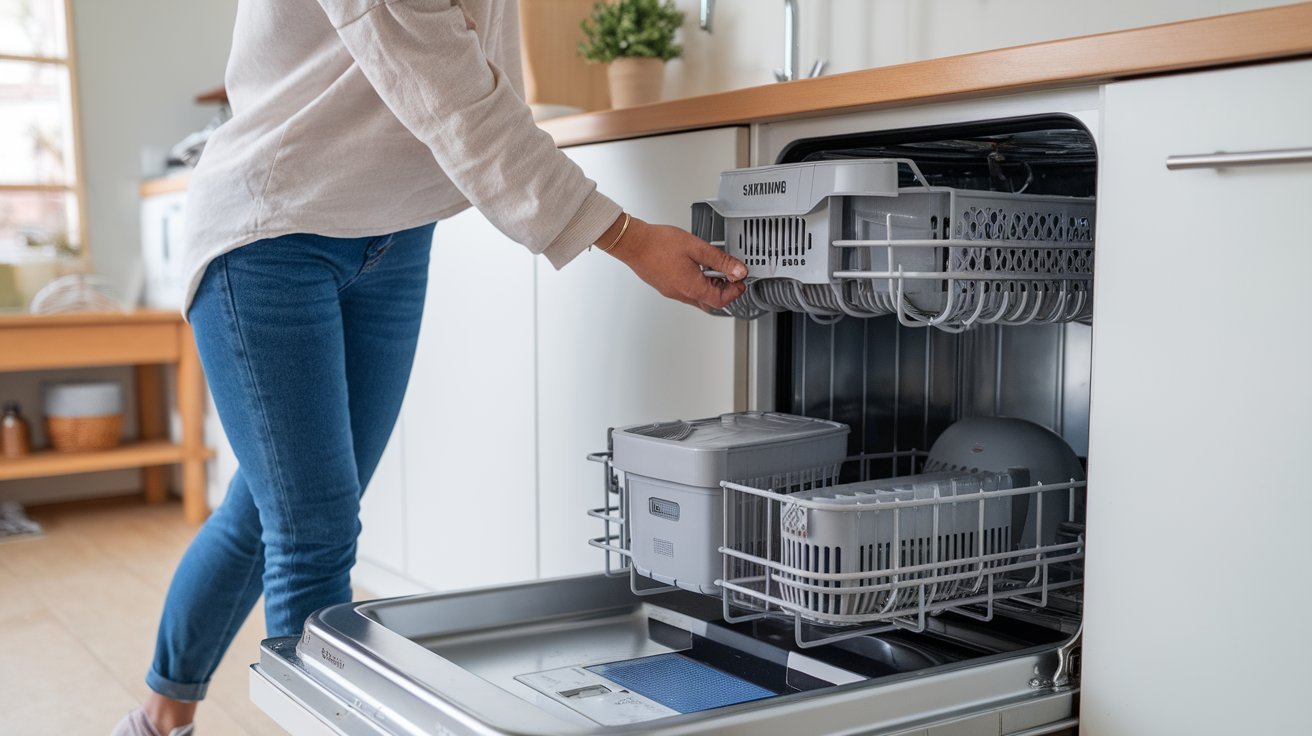
A Samsung dishwasher not draining can leave standing water in the bottom of the tub, produce unpleasant odors, interrupt a wash cycle, or trigger a drain-related error code. Fortunately, many drainage problems are caused by relatively simple issues such as a clogged filter, blocked sink drain, kinked drain hose, or debris around the sump or drain pump.
Samsung’s current troubleshooting guidance recommends checking the sink connection, drain hose, dishwasher filter and drain area before requesting professional service. The exact filter design and troubleshooting procedure can vary between Samsung dishwasher models, so your model-specific manual should always take priority.
Why Is My Samsung Dishwasher Not Draining?
There are several possible reasons a Samsung dishwasher may stop draining properly. The most common are related to blockages or restricted water flow.
Food particles can collect in the dishwasher’s filter and sump area, preventing water from reaching the drain system efficiently. A drain hose can also become kinked, bent, compressed, or blocked, particularly underneath the kitchen sink.
The problem may actually be outside the dishwasher. A clogged sink drain or garbage disposal can prevent wastewater from leaving the dishwasher. Samsung also notes that a recently installed garbage disposal may still have its knockout plug in place, which can block the dishwasher’s drain connection.
If the dishwasher has recently been installed, incorrect drain-hose routing is another possibility. Depending on local plumbing requirements, the hose may need an air gap or high loop to help prevent wastewater from flowing backward into the dishwasher.
Check the Sink, Garbage Disposal and Drain Hose
Before taking apart the dishwasher, inspect the sink drainage system.
Run water into the sink for about 30 seconds. If the sink itself drains slowly or remains full, the problem may be with the home’s plumbing rather than the dishwasher. Samsung recommends contacting a plumber when the connected sink does not drain properly.
If your dishwasher drains through a garbage disposal, check that the disposal is clear of food waste and that it is not clogged. If the disposal was recently installed, verify that the dishwasher connection’s knockout plug was removed.
Next, inspect the dishwasher’s drain hose underneath the sink. Look for:
- Kinks or sharp bends
- A hose compressed by the dishwasher
- Damage or cracks
- An incorrectly positioned connection
- Missing or improperly formed high loop
- A blocked hose connection
A restricted hose can prevent water from being pumped out even when the dishwasher itself is operating normally.
Clean the Samsung Dishwasher Filter and Sump
A dirty filter is one of the first things to check when a Samsung dishwasher is not draining.
During normal operation, dishwasher filters capture food particles and other debris. Over time, residue can accumulate around the filter and sump area, restricting drainage.
Turn off the dishwasher and follow the cleaning instructions in your model’s user manual. Depending on the model, the filter assembly may contain coarse, main, and fine filtering components. Samsung advises cleaning removable filters under running water and using a soft brush when appropriate.
After cleaning, make sure every filter is correctly reassembled and seated. Samsung specifically warns that incorrectly installed or missing filter components can contribute to drainage problems.
Never operate a dishwasher without its required filters installed.
When checking the sump, use protective gloves and be careful because broken glass, sharp objects, bones, or other debris may be present.
Check the Drain Pump for Debris
If the filter and hose appear clear but the dishwasher still will not drain, the drain pump may contain debris or have a mechanical problem.
Some Samsung models provide access to the drain-pump area beneath the filter. Samsung’s guidance for applicable models includes removing the lower rack and filter, removing water around the filter area, and inspecting the pump and impeller for foreign objects or damage.
Common debris can include pieces of food, labels, plastic fragments, glass, or other small objects.
Do not force components or disassemble parts that your model’s manual does not identify as user-serviceable. If the pump appears damaged or does not operate correctly after basic troubleshooting, professional service may be necessary.
A 3C pump operation error, for example, indicates a pump-related problem in Samsung’s current error-code guidance. Samsung recommends restarting the appliance once, and if the problem remains, requesting service.
Samsung Dishwasher Drain Error Codes
Samsung dishwashers can display different information codes depending on the model and region. For drainage problems, commonly encountered codes include 5C, 5E, SC, and SE.
These codes generally indicate that the dishwasher is having difficulty draining. Samsung recommends checking the drain connection, hose, filter, and sump.
Some newer Samsung guidance also identifies 5C2 as a condition in which the dishwasher attempts to drain but the pump fails to start, runs briefly, or stalls. In that situation, Samsung recommends disconnecting power before inspecting the sump for debris that could be interfering with the pump impeller.
Another important distinction is the 1E/IE code on certain Samsung models. Samsung associates this with a clogged filter condition on some Waterwall models and recommends cleaning the fine filter.
Because error codes can vary by model, always check the manual for your exact dishwasher model number before performing model-specific procedures.
What to Do If There Is Still Standing Water
A small amount of water can sometimes remain in parts of a dishwasher’s drainage system, but significant standing water after a completed cycle deserves investigation.
Start by checking the simplest causes:
- Inspect the sink drain.
- Check the garbage disposal, if connected.
- Inspect the drain hose for kinks and blockage.
- Clean the dishwasher filter.
- Inspect the sump and drain area for debris.
- Check the drain pump if your model permits safe access.
- Look for the dishwasher’s error code or flashing-light pattern.
- Run another appropriate cycle or drain operation after completing the checks.
If the dishwasher still refuses to drain, the cause could involve the drain pump, electrical components, plumbing connection, sensor system, or another internal component.
Samsung’s current support guidance recommends requesting professional service when the basic troubleshooting steps do not resolve the problem.
How to Prevent a Samsung Dishwasher From Not Draining
Regular maintenance can reduce the chance of recurring drainage problems. The most useful habit is keeping the filter and drain area clean.
Remove obvious food particles from dishes before loading them, particularly large pieces that could reach the filtration system. Periodically inspect the filter and clean it according to the instructions for your model.
Also check the area underneath the sink from time to time. Make sure the drain hose remains properly positioned and free of kinks. If plumbing work or a garbage-disposal replacement has recently occurred, verify that the dishwasher connection was installed correctly.
Avoid putting your hands into the drain area without protection, because sharp debris can be hidden beneath standing water or around the filter.
If you live in an area where freezing temperatures are possible, consider whether the water or drain line may be frozen. Samsung advises warming the affected area when freezing is suspected and contacting a plumber if the problem persists.
Final Thoughts on a Samsung Dishwasher Not Draining
When a Samsung dishwasher not draining, the solution often begins with a basic inspection rather than an immediate component replacement. A clogged filter, dirty sump, blocked sink, garbage-disposal issue, or kinked drain hose can all interfere with wastewater removal.
Start with the external plumbing, then inspect the hose and clean the dishwasher’s filter and drain area. If your model allows it, inspect the drain pump for foreign objects. Pay attention to codes such as 5C, 5E, SC, SE, 5C2, and 3C, but always confirm their meaning for your particular model and region.
If basic troubleshooting does not restore normal drainage, avoid repeatedly running the appliance with standing water. Professional Samsung service or a qualified appliance technician can determine whether the problem involves the drain pump, plumbing, wiring, sensors, or another internal component.
With regular filter cleaning, proper drain-hose routing, and attention to the sink connection, many common drainage problems can be identified early and prevented from becoming more serious.

Terratomic is a distinctive term that can refer to technology, digital projects, scientific concepts, or a specialized name depending on the context in which it is used. Because the word is relatively uncommon, people searching for “terratomic” may encounter different interpretations and references across the internet.
The term combines ideas associated with “terra,” meaning Earth or land, and “atomic,” referring to atoms and atomic-scale science. That combination gives the word a technological and scientific character, although a name or brand using Terratomic does not necessarily have a direct connection to nuclear science.
For anyone researching Terratomic in 2026, the most important step is to identify the particular website, product, company, project, game, or scientific reference associated with the term. This guide explains the broader meaning, possible applications, terminology, online presence, and considerations for understanding Terratomic.
What Does Terratomic Mean?
The word Terratomic is not a common everyday English term with one universally accepted dictionary definition. Instead, it functions primarily as a specialized name or compound expression.
The first part, “terra,” comes from Latin and is commonly associated with Earth, land, or the terrestrial environment. The second part, “atomic,” relates to atoms, matter, atomic structure, or extremely small scales.
When combined, the name can suggest a relationship between Earth and atomic-scale technology. However, the meaning should not automatically be interpreted as nuclear energy, radioactive materials, or atomic weapons.
Names containing scientific terminology are often created for branding purposes. A company or digital project may select a name such as Terratomic because it sounds technological, innovative, scientific, or environmentally oriented.
Consequently, the exact meaning of Terratomic depends heavily on where the term was encountered.
Terratomic and Science-Related Terminology
The word has a scientific sound because atomic science is a broad field involving the structure and behavior of atoms.
Atoms consist of a nucleus containing protons and neutrons, surrounded by electrons. Modern physics examines atomic behavior through areas such as quantum mechanics, spectroscopy, atomic physics, chemistry, and materials science.
The word “atomic” is therefore much broader than nuclear technology. A scientific project using atomic terminology could potentially concern sensors, materials, computing, energy, chemistry, or fundamental physics.
Similarly, “terra” is frequently used in scientific terminology related to Earth. Earth science encompasses disciplines such as geology, atmospheric science, oceanography, environmental science, and geophysics.
The combination of these concepts can create a name that suggests a technological connection between the microscopic world and the physical planet.
However, it is important not to treat the name itself as evidence of a specific scientific technology. A brand name cannot establish what a product or organization actually does.
Terratomic as a Technology or Digital Name
In online environments, unusual words such as Terratomic can function as names for software, technology projects, websites, communities, or digital products.
Technology companies often choose names that are memorable and distinctive rather than strictly descriptive. A coined name can also make it easier to establish a unique identity across websites, social platforms, applications, and online communities.
If Terratomic is encountered as the name of a digital service, users should examine the project’s official website, documentation, developer information, privacy policy, terms of service, and contact details before assuming what the platform provides.
This is particularly important for unfamiliar websites. A professional-looking name does not automatically establish legitimacy, security, or reliability.
When evaluating an unfamiliar Terratomic-related website, useful questions include:
- Who operates the website?
- What service or product does it provide?
- Is there identifiable company information?
- Does it publish documentation?
- What information does it collect?
- Does it provide clear terms and privacy policies?
- How long has the service been operating?
- Are independent sources available?
These checks can help distinguish an established technology project from an unrelated website using a similar name.
Potential Environmental and Earth-Technology Associations
The terra component of Terratomic can also suggest environmental or Earth-focused technology.
Modern technology increasingly connects advanced materials and atomic-scale research with environmental applications. Examples include improved batteries, catalysts, photovoltaic materials, sensors, water-treatment technologies, and methods for studying environmental pollutants.
At the atomic and molecular level, researchers can investigate how materials behave and how their structures influence performance. This type of research can contribute to technologies designed for energy efficiency, cleaner manufacturing, environmental monitoring, and resource management.
Nevertheless, these are examples of areas where atomic-scale science can intersect with Earth-related challenges; they should not be interpreted as specific claims about an entity called Terratomic without reliable information identifying that entity.
How to Research Terratomic Online
Because Terratomic is a relatively distinctive search term, users may benefit from adding context to their search.
Instead of searching only for “terratomic,” consider combinations such as:
- Terratomic official website
- Terratomic technology
- Terratomic company
- Terratomic software
- Terratomic project
- Terratomic review
- Terratomic login
- Terratomic documentation
- Terratomic meaning
Adding a descriptive keyword can help separate similarly named websites, organizations, and projects.
Users should also check whether the information comes from an official source or an independent source. Official pages are useful for identifying what an organization says about itself, while independent sources can provide additional context.
If the search concerns a product or service involving money, downloads, personal information, or account creation, additional caution is appropriate.
Terratomic, Branding, and the Importance of Context
One interesting feature of a name like Terratomic is its ability to communicate several ideas at once.
“Terra” can evoke Earth, nature, geography, and physical environments. “Atomic” can evoke precision, advanced science, technology, engineering, and microscopic structures.
Together, those associations can make the name sound appropriate for a wide range of projects. A technology startup could use it for advanced materials. An environmental project could use it to emphasize scientific research. A software project could use it simply because the name sounds distinctive.
This is why interpreting Terratomic solely from its name can be misleading.
The same principle applies to many technology and internet searches. A distinctive name may represent a company in one context, a product in another, or an unrelated online project somewhere else.
Is Terratomic a Company, Product, or Concept?
Without identifying the specific reference, Terratomic should not automatically be classified as a particular company, product, or scientific discipline.
The term can potentially function as a brand, project name, username, website name, or technical expression. The surrounding search context is necessary to establish which interpretation is correct.
For readers researching a specific Terratomic service, the most reliable approach is to identify the exact URL, organization, product description, or source where the term appeared.
This also helps avoid confusion with similarly named entities. Internet search results can contain outdated pages, third-party directories, user-generated descriptions, and unrelated references that share similar terminology.
Final Thoughts on Terratomic
Terratomic is a distinctive term whose meaning depends on context. Its construction combines the Earth-related idea of “terra” with the scientific concept of “atomic,” creating a name that naturally sounds associated with technology, science, engineering, or Earth-related innovation.
However, the name alone does not establish a specific company, technology, product, or scientific application. Anyone researching Terratomic in 2026 should first identify the exact entity behind the term and then verify information through reliable sources.
Whether encountered as a technology name, digital project, scientific reference, or online brand, Terratomic demonstrates how modern names often combine scientific and environmental language to create distinctive identities.
For the most accurate understanding, context remains essential: identify where the term appeared, examine the associated organization or project, check official documentation, and compare claims with independent information. That approach provides a much clearer picture of what Terratomic actually represents.


2026 Honda Ridgeline TrailSport: Specs, Features, Off-Road Capability, Towing, and Price

Samsung Dishwasher Not Draining: Causes, Fixes and Troubleshooting Guide 2026

Terratomic: Complete Guide to Terratomic, Its Meaning, Technology, and Modern Uses

Essential Skills Necessary to Have as a Bookkeeper

Wendy Edgar-Jones: The Film Editor, Mother of Daisy Edgar-Jones, and Her Career Behind the Camera

Ways to Monitor Both Stocks and Digital Assets in One Place
-
 Business3 months ago
Essential Skills Necessary to Have as a Bookkeeper
-
 Celebrity3 months ago
Wendy Edgar-Jones: The Film Editor, Mother of Daisy Edgar-Jones, and Her Career Behind the Camera
-
 Business3 months ago
Ways to Monitor Both Stocks and Digital Assets in One Place
-

 Business3 months ago
The “Face” Crisis: Will Seedance AI Lose Its Best Creators
-

 Business3 months ago
Easy Outdoor Kitchen Ideas
-

 Celebrity3 months ago
Jarnette Olsen: The Woman Behind the Success of the Olsen Family
-

 Blog2 months ago
FeedBuzzard Advertise: The Complete 2026 Guide to Smarter Digital Advertising and Better Campaign Performance
-

 Blog2 months ago
Oversite vs Oversight: Meaning, Differences, Grammar, Examples, and Correct Usage (2026 Guide)